


Perhaps you have prepared to start a business by reading books, talking to friends, scouring the web, or attending seminars.
Perhaps some of you are in the middle of researching right now.
There is so much information and so many opinions that you may ultimately feel you do not really understand it, so I will state the essence plainly.
These are the only things you need to start a business.
- Mindset (resolve)
- A business plan
- Money
You may think, “Only these?!” But there are just three.
Mindset (Resolve)
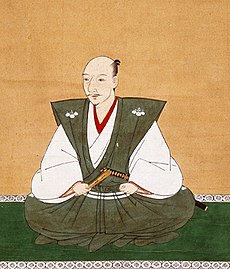
Oda Nobunaga pressed ahead with reform and the unification of Japan through a forward-looking outlook and strong will. I imagine he possessed extraordinary resolve.
“I have been in this industry a long time, so if I start a business, it will go well. Perhaps it is just a question of timing...”
That is not it.
A business will not necessarily go well right away. Having helped several hundred founders, I can say that even managers who ultimately become highly successful are likely to face hardship for about six months. The fear of not making sales, the fear of funds dwindling, concerns about employees, trouble erupting with business partners, projects that do not proceed as expected, discord within the family... At times, you must make difficult decisions or take on battles. You are the person responsible for all of them. Do you have the resolve to overcome these various situations? I feel that this is the most important element.
Business Plan
What is a business plan? Why is it important?
It is an expression in words and figures of what you will sell, when, to whom, and how.
Why is this important? Because only geniuses can run a business successfully by winging it.
If you, who are about to start a business, have excellent instincts, unparalleled talent, and a natural head for business, you will achieve ample success even without a business plan. However, I believe that even such a person would be even more successful with a solid business plan. In the end, every kind of person needs a business plan.
In a business plan, it is important to clarify the business you want to build, establish what you can and cannot do, and plan your actions and numerical targets.
I vaguely want to form a company and do business. I think any business would do as long as it looks profitable... People like this generally close their companies within a year.
Clearly identify what kind of business you want to run, and carefully consider whether you have sufficient knowledge, experience, and networks for it.
Management is also always accompanied by constraints. If only you had more money, better personnel, more time... Within those limited constraints (conditions), consider how you will operate the business. What can you do, and what can you not do? How will you overcome what you cannot do, perhaps by outsourcing it? If you do not do this, both money and time will be exhausted in no time.

All of this comes together in a plan expressed in numbers.
How much will you spend to develop a product or service, and by when? How many appointments will you make, and how? What will your closing rate and time to close be? What unit price will you set, and what sales method will you use? You put these and various other factors into figures and plan while confirming matters such as whether the business will make a profit, how much funding will be needed, and which crucial points must absolutely be achieved. You operate the business while always keeping that plan in the back of your mind. If the business plan calls for ¥2 million in sales, you must not be basking in the achievement of actual sales of ¥1 million. Without a business plan, however, you might mistakenly think of ¥1 million in sales, “I worked hard; I did well. Sales are progressing smoothly.”
I believe that a business plan is a navigation chart.
Will you set out into the vast ocean that is the business world with a navigation chart, or without one?
It is self-evident that you are less likely to run aground with a navigation chart. Take a solid sea chart with you into the exciting open sea!
Money

When does a company go bankrupt? When it runs out of money.
Money is indispensable to a business. Even if your business depends on an idea, in the ordinary case where no reduction or exemption scheme applies, filing and registering a patent entails a filing fee of ¥14,000, an examination request fee of ¥138,000 plus ¥4,000 multiplied by the number of claims, patent fees, and other costs. Forming a kabushiki kaisha (stock company) entails registration and license tax (0.7% of capital, with a minimum of ¥150,000), articles-of-incorporation certification fees, and other costs. If you rent an office, you need rent. If you hire people, you need salaries.
Even when you are disciplined about spending where it matters and saving where you can, business involves cash movements far removed from everyday personal spending. Make a solid business plan and anticipate cash movements so that you can use money properly without becoming unsettled.
Just how much money is needed? Of that amount, how much must you personally prepare?
It depends on the case, but as a general guideline, if a business needs ¥5 million, you will likely need to have prepared about one-third of that as your own funds. You contribute one-third yourself and borrow two-thirds from a bank.
Save money steadily as you prepare to start your business.
Eagle Accounting Office is an expert in business plans and money. If you have any concerns, please feel free to contact us by telephone (0120316266) or through the inquiry form below.