


U.S.-based Pfizer announced a merger on the 23rd, but the terms have sparked an uproar over tax avoidance.
~ Excerpt omitted ~
Criticism is spreading that the move is intended to avoid tax because the company will relocate its headquarters to Ireland, where the corporate tax rate is substantially lower than in the United States.
“The president believes it is not fair for companies to renounce their obligations in the United States and relocate on paper to countries with lower tax rates” (Earnest, White House press secretary)
With a succession of U.S. companies moving overseas to reduce their taxes, the government has just tightened its regulations, and the merger may not be approved. (24th, 07:31)
This reported merger is between Pfizer of the United States and Allergan of Ireland, but Allergan is expected to be the surviving company, with Pfizer as the company being absorbed (according to a Nikkei report). Allergan is naturally the smaller company, making this a suspicious-looking arrangement known as a “reverse merger.”
Because Allergan, which is headquartered in Ireland, will remain, Pfizer’s headquarters are expected to be in Ireland.
All assessments of countries, regions, and tax-avoidance measures from this point on reflect the author’s views when the article was published in 2015.
Ireland Is a Tax Haven
Ireland’s corporate tax rate is a bargain at 12.5% (cheap! Japan’s is about 35%). Any place with a tax rate of 20% or less gets treated as a tax haven, so Ireland is a tax haven.
Ireland itself may not be a country you hear much about. Where is it?
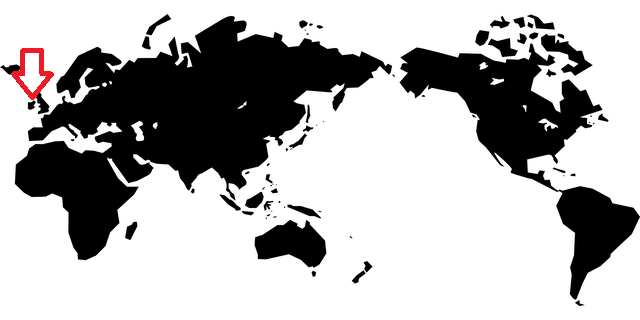
It is a small island to the left of Great Britain. It does seem to be a comfortable country to live in, but it has not been particularly stable, with a terrorist organization (the IRA) active amid the independence movement and other issues.
And yet, for some reason, world-famous companies have set up their headquarters in a place like that. Google, Apple, and now... Pfizer (planned).
Why? The low taxes are probably a major reason.
The Ultimate Legal Tax Dodge: Double Irish with a Dutch Sandwich
The structure involves creating two companies (Double) in Ireland (Irish) and placing the Netherlands (Dutch) between those two companies (Sandwich).
Put simply: “Set up two companies in Ireland. Make the first a nominal company that holds the licenses, and make the second a company that performs administrative work. Send money tax-free from the first company to the Netherlands, then send it back tax-free from the Netherlands to Ireland (to the company doing the administrative work). Basically, that leaves the money untaxed anywhere in the world.” Frightening. They must have used a considerable number of lawyers to devise this structure. Legally, it is clean. There were also reports that Google negotiated this method with the U.S. tax authorities (the Internal Revenue Service) in advance in 2006 and paid some amount.
For a technical explanation, please see the audit firm’s materials (Japanese PDF). Or rather, the details may make you feel sick, so perhaps you should not look (lol).
By the way, this method unsurprisingly came to be seen as a problem worldwide, and new arrangements could no longer be created in 2015. Existing companies were given a six-year grace period.
~ Excerpt omitted ~
In October 2014, Ireland said it would revise its tax system to require all companies registered in the country to establish their tax residence there within six years. This would bring an end to the tax-saving structure known as the “Double Irish.”
~ Omitted ~
The Double Irish with a Dutch Sandwich May Die, but Tax Havens Live On
The method of paying basically zero tax has finally come to an end, but Ireland’s 12.5% tax rate remains unchanged.
In this case, if Pfizer establishes its headquarters in Ireland and channels its profits to the Irish headquarters, its tax rate will be 12.5%! That is why the plan is causing controversy.
Even Mr. Trump Calls It “Disgusting”
Republican front-runner Donald Trump, who has called for a corporate tax overhaul, called the deal “disgusting” in a statement, saying “our politicians should be ashamed.”
(Reuters, November 23, 2015)
Could he become the next president of the United States?! Even Mr. Trump—a billionaire himself who remains at the front of the race despite his repeated controversial remarks—criticized it. This time, there was no bombshell comment from him; it was a safe statement...
So, what did you think? Tax avoidance around the world is a fierce, never-ending game of cat and mouse.
In the United States, taxes are regarded as an “expense,” so of course you cut any expense that can be cut. The values are quite different from those in Japan.
A global movement is emerging through the OECD to address international tax avoidance across the world.
The developments ahead will be worth watching.