

You started a business. You took over a company.
You want to grow the business and someday build a company that can go public.
Perhaps many business owners think along those lines, even if only vaguely.
Some may also raise funds from venture capital firms or angel investors right at the start and make a rapid push toward going public.
As a business owner, don’t you think about going public at least once and look into its advantages and disadvantages?
This time, I would like to explain a case that shows just how stubbornly a listed company can fight for survival—well beyond a list of pros and cons.
For better or worse, it may change your image of listed companies.
LCA Holdings: a listed company with unbelievable staying power
There is a company that was delisted on December 1, 2015. Its name is LCA Holdings.
At the time, it had been in business for 50 years. Its main business was consulting: it began with consulting on the manufacturing process for yatsuhashi sweets, then went on to undertake a variety of businesses.
Looking at the history of LCA Holdings
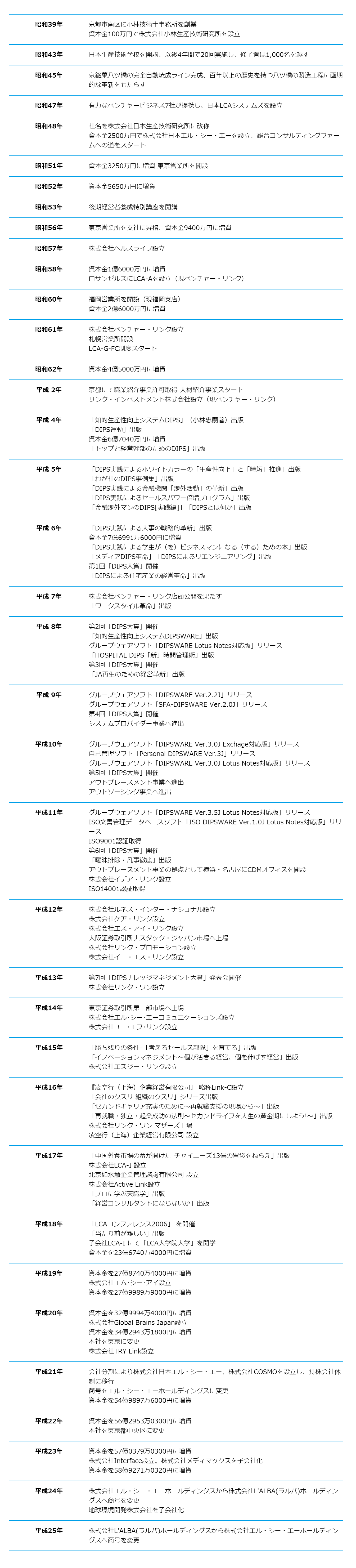
While pursuing various businesses, it also acquired various companies, and its stated capital exceeded ¥5.8 billion.
The epic story of LCA Holdings’ battle with the Tokyo Metropolitan Government
Despite being listed, it had its bank accounts seized by the Tokyo Metropolitan Government

Cash and deposits in the financial statements before the seizure: ¥94 million.
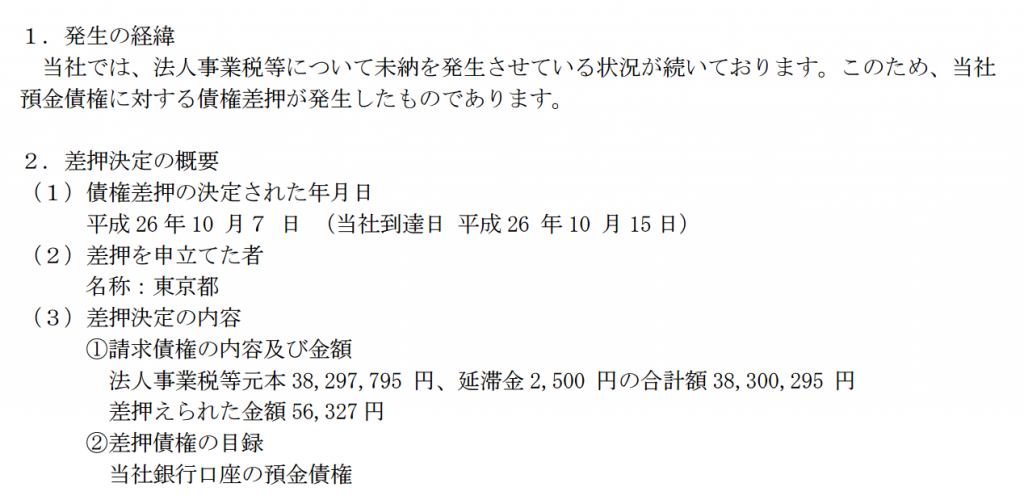
Seeking to collect ¥38 million in unpaid taxes, the Tokyo Metropolitan Government executed a seizure of its bank accounts.
The result was a crushing defeat: the amount it recovered was ¥56,000...

Then, a little more than one month after the seizure, cash and deposits had risen to roughly ¥125 million.
Seeing this, the Tokyo Metropolitan Government was probably furious. Unforgivable.
So it promptly seized assets again. This time, it was serious.
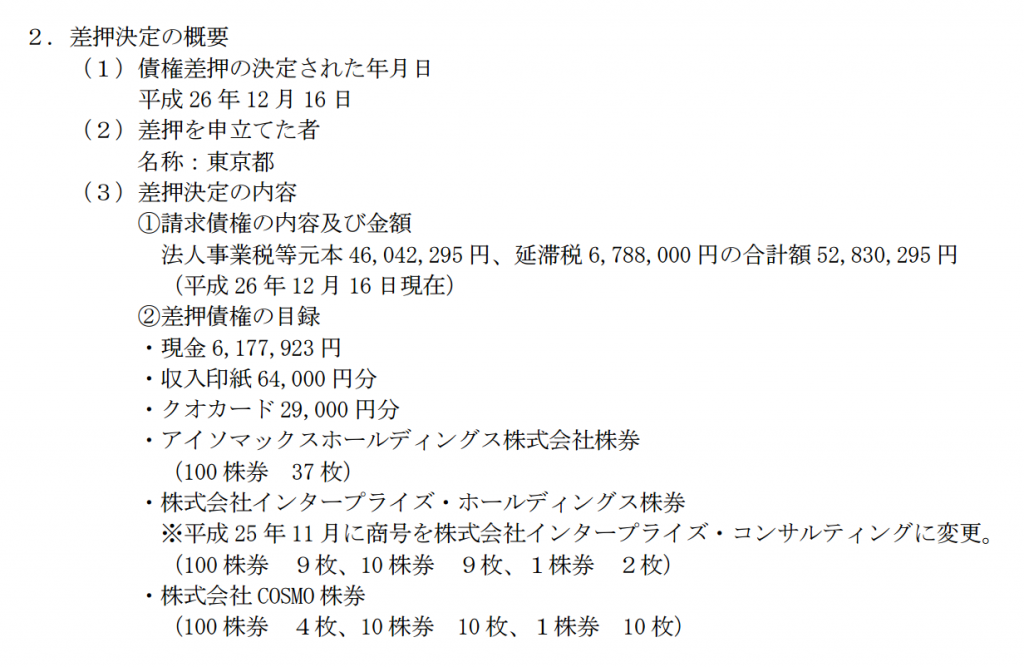
The previous time, the seizure of the bank accounts had yielded only ¥56,000. Perhaps it thought the company must be holding cash. This time, it went to the company itself.
What...? Only ¥6 million!? Once again, it could not recover as much as it wanted.
But look at what was seized.
QUO gift cards, revenue stamps that had been bought and stockpiled, share certificates... It was as if they were taking the contents of the safe. You can almost feel the Tokyo Metropolitan Government’s anger. Collection is frightening. Its anger did not subside.
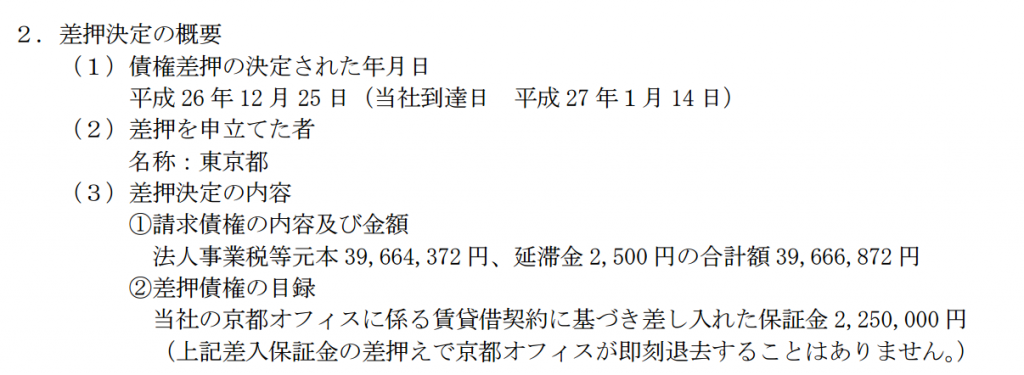
Not many days later, another seizure. This time it was the office security deposit.
Where had the roughly ¥120 million in cash and deposits shown in the financial statements gone? Of course, a financial-statement balance and the amount recoverable through seizure are not the same. Still, looking at this exchange, you feel that this is a battle.
The seizure reached even the ¥2 million security deposit. Having even money related to the office restrained must have been quite a shock to the company as well.
Let’s look here at the stance of the Tokyo Metropolitan Government Bureau of Taxation’s official Twitter account at the time.
[December Is “All-Tokyo Stop Tax Arrears Campaign Month”!] The Tokyo Metropolitan Government and wards, cities, towns, and villages have designated December as All-Tokyo Stop Tax Arrears Campaign Month to secure stable tax revenue and fairness in tax payment. They are working together on diverse collection measures, including efforts to promote tax payment through public relations and reminders, as well as enforcement against tax arrears such as seizures, wheel clamps, and searches.
— Tokyo Metropolitan Government Bureau of Taxation (@tocho_syuzei) December 3, 2015 (Japanese)
“In December, we are working together on diverse collection measures, including enforcement against tax arrears such as seizures, wheel clamps, and searches.”
Business owners may have felt the blood drain from their faces.
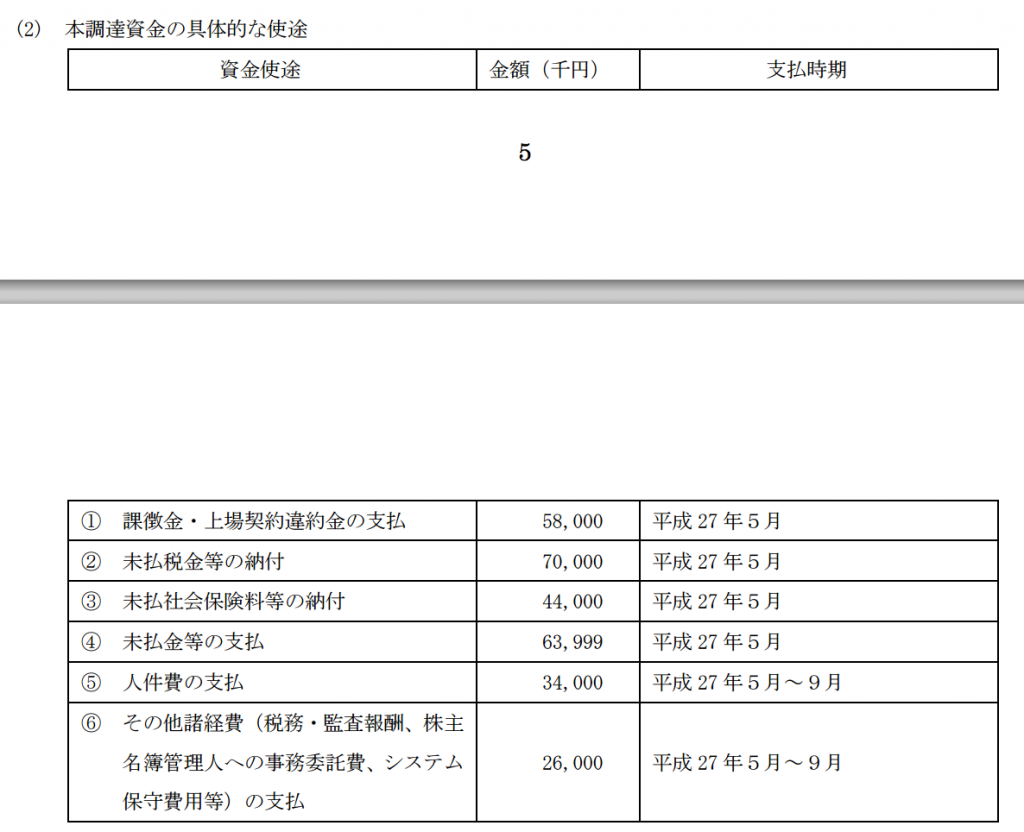
It got through it by increasing capital. All the funds raised through the capital increase went toward repaying debt. It weathered a desperate crisis through the fundraising available to it as a listed company. That is its tenacity.
The road to delisting
Can real estate that looks like a stone become glittering gold? The issue over the valuation of an in-kind contribution
In Heisei 21 (2009), its liabilities exceeded its assets, and it received an in-kind contribution of real property in order to resolve that situation (there is a separate article with details on in-kind contributions, so please refer to it if you are unfamiliar with them).
To make an in-kind contribution of real property, an appraisal by a real-estate appraiser and confirmation by a lawyer are required (where an inspector’s investigation is omitted).
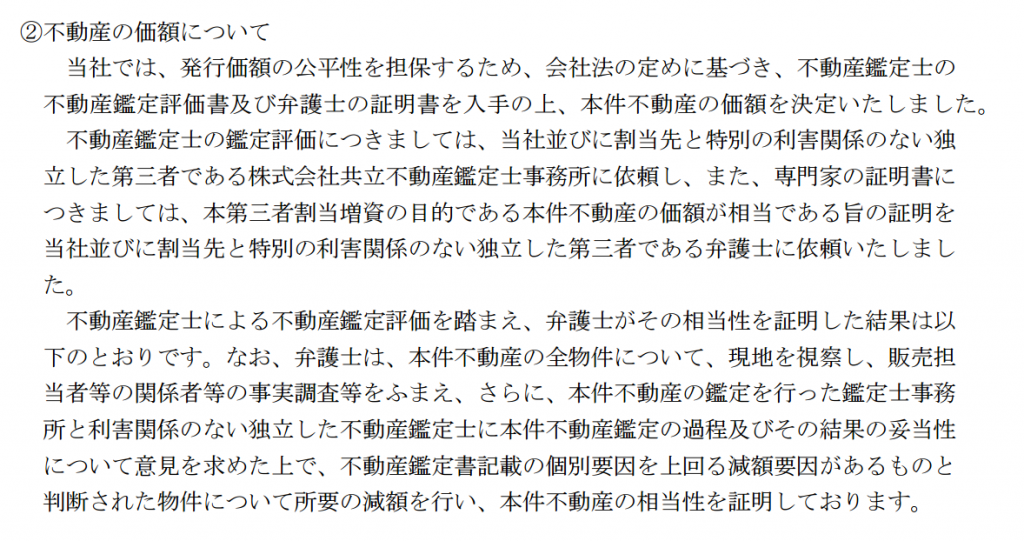
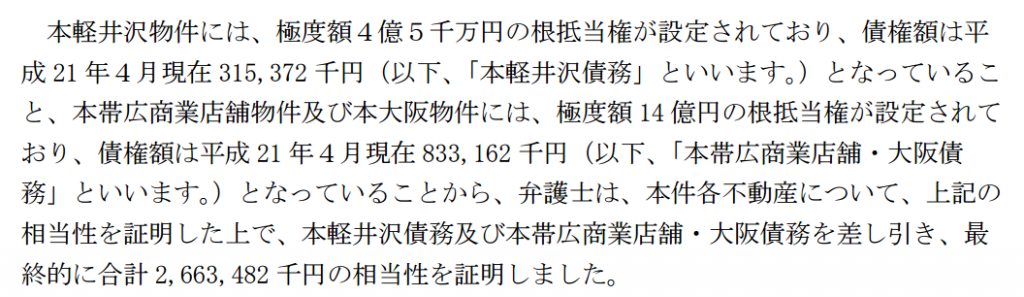
It increased capital by treating the real property as having a value of ¥2.6 billion.
But then the Financial Services Agency called a halt. The halt came afterward. For the company, it was a matter that affected whether it could remain listed.
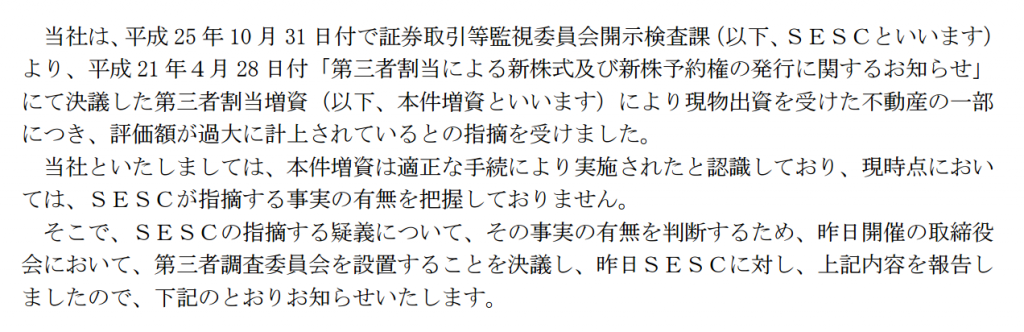
A third-party committee was established to investigate the details of the real property. The result...
What the investigation at the time showed was a problem in which real property that had originally not been intended as the subject of the in-kind contribution was included in order to prevent its liabilities from exceeding its assets, and a high valuation was assigned on the basis of that property’s lease agreement.
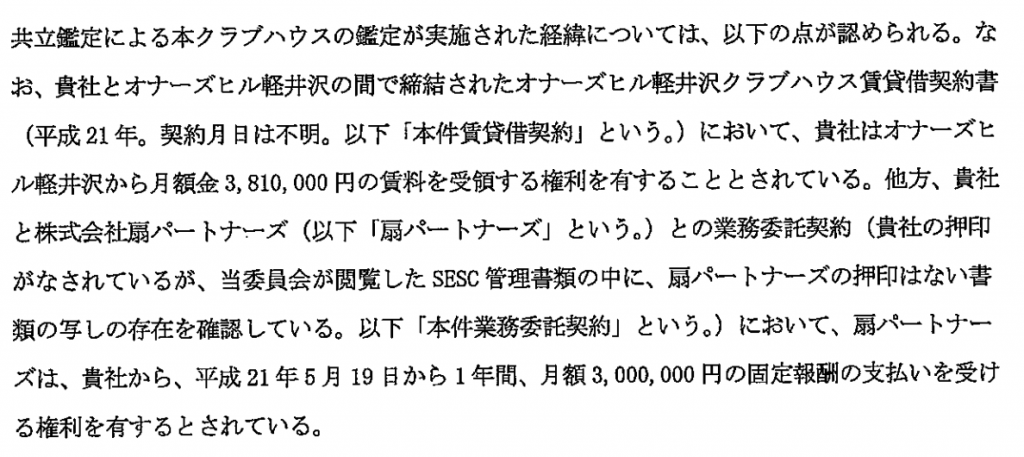
While entering into a ¥3.8 million lease agreement, it also entered into a ¥3 million service contract, thus paying ¥3 million and receiving ¥3.8 million. The real property was appraised as a prime property bringing in ¥3.8 million in rent.
Looking only at the ¥3.8 million coming in, it may glitter like gold, but what about the ¥3 million going out?
Out!!! An order to correct the financial statements is issued.

It even showed that it was prepared to sue the Financial Services Agency.
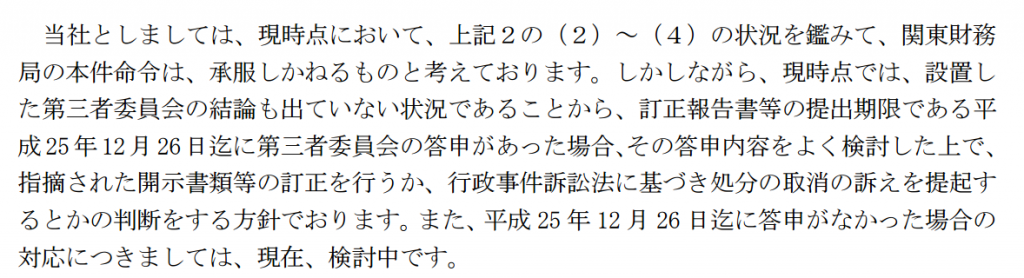
Reality sank in, and its resolve collapsed... That was how things turned out.
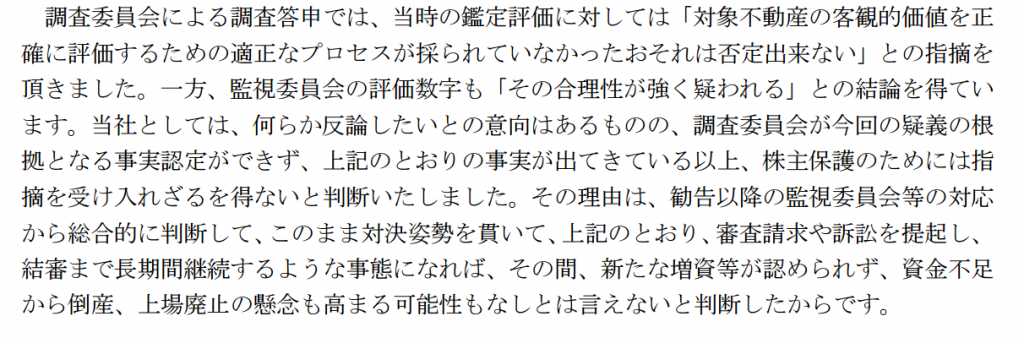
Continuing to fight the Financial Services Agency would also affect its ability to stay listed. It avoided that, as one would expect.
But without giving it a moment to breathe, the Tokyo Stock Exchange told it that because it could not manage internal controls, it would be delisted unless it improved.
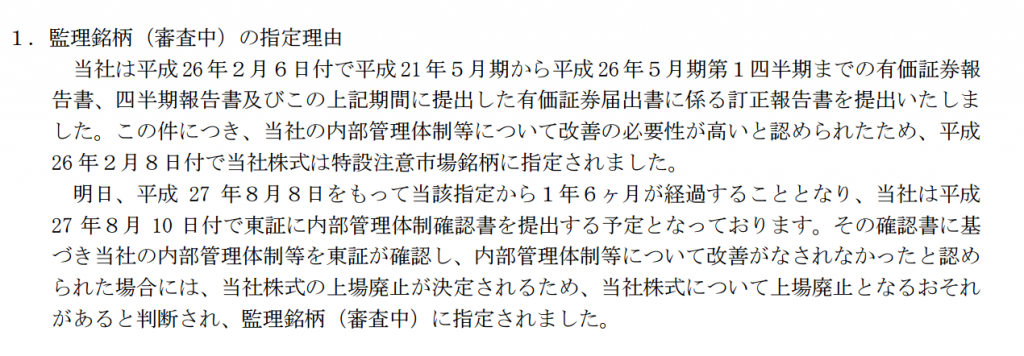
In the end, it was delisted because no improvement in this internal control system was seen.
(Extra) Suing the former management
Officers of listed companies, such as directors and statutory auditors, can always face claims for damages. They bear duties of due care and loyalty, so a breach may result in damages. The troublesome part is that it is not clear what exactly constitutes a breach of the duty of due care and the like.
LCA Holdings sued its former management in connection with this real-property capital increase.
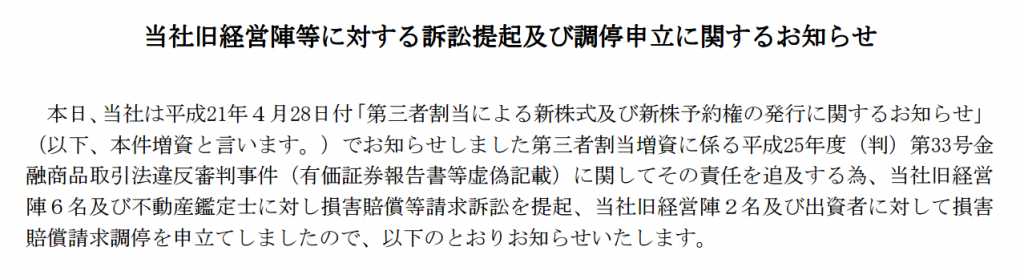

The amount claimed was ¥400 million.
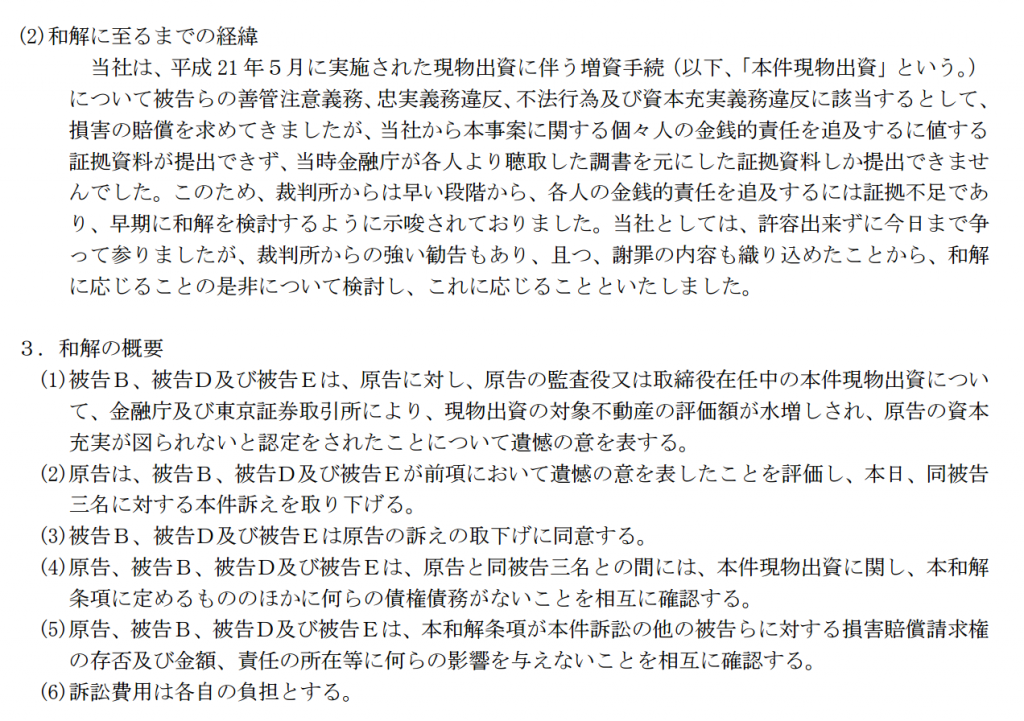
In the end, the company’s explanation at the time regarding the settlement was that proving the amount of damage would be difficult. It took the form of a settlement that only made them say they were sorry. The settlement payment was zero. Since each side bore its own litigation costs, if you think only about money coming into the company, it was down by the amount of its legal fees...
Still, when I think of officer liability at a listed company, payment from directors’ and officers’ liability insurance comes to mind... But from the details of this settlement alone, we cannot tell whether it had insurance or what extent of coverage the policy provided.