

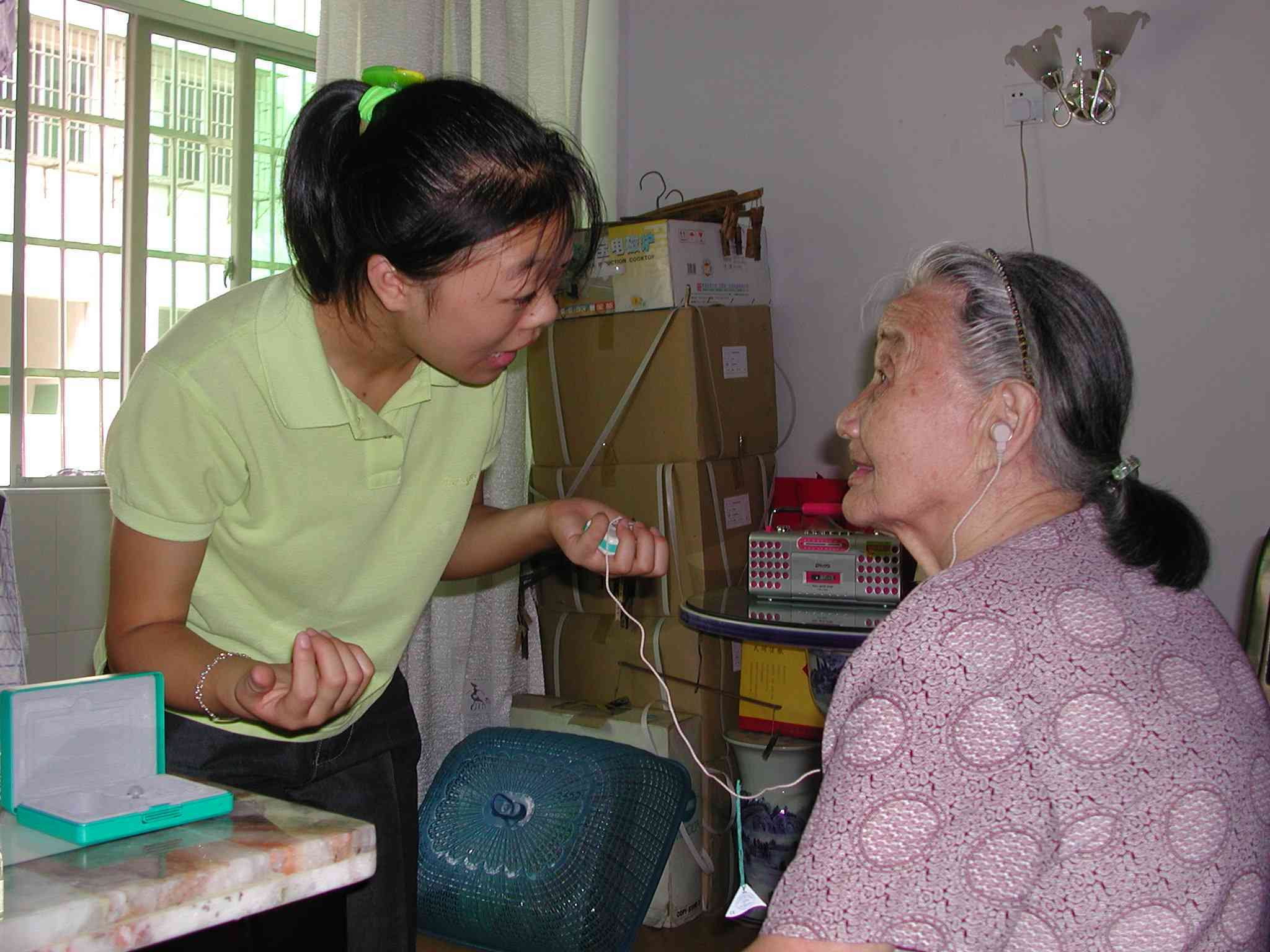
My grandmother passed away recently. She was nearly 100, so she lived a long, full life.
In Japan, life-prolonging treatment is common, so she spent a long time bedridden—more than a year. Every time I visited, she would ask me why she was in that condition, and I struggled to answer.
Japan's population is aging. According to the Cabinet Office's 2025 Annual Report on the Ageing Society, people aged 65 or older are projected to account for 32.3% of the population in 2035 (based on the medium-fertility, medium-mortality projection in the National Institute of Population and Social Security Research's Population Projections for Japan, 2023 revision). The market for products and services for older people will likely continue to expand.
If you are an entrepreneur, you have probably considered the market for older people at least once.
This time, I will talk about the nursing home business within that market.
A Look at Japan's Current Situation
- Society is aging (people aged 75 or older will make up 18.8% of the total population in 2030, and 32.3% will be aged 65 or older in 2035. Both figures are based on the medium-fertility, medium-mortality projection in the National Institute of Population and Social Security Research's Population Projections for Japan, 2023 revision.)
- The shift toward nuclear families continues, and the number of older people living alone is increasing (more than half live either alone or only with a spouse).
- The number of facility residents was 907,732 in the latest statistics available when this article was published, from July 2015 (the older population was estimated at 33.84 million in September 2015, meaning approximately 2.8% lived in facilities).
As a market, it has many attractive features.
Summary of Nursing Home–Like Options
| Legal basis | Name | Overview | Floor area | Subsidy |
|---|---|---|---|---|
| Act on Social Welfare for the Elderly | Fee-based nursing home with long-term care | A facility designated by a prefecture or other authority to provide “daily-life long-term care for residents of specified facilities” under long-term care insurance. Long-term care staff are stationed on site and provide services in line with care plans. Designation is subject to review by the prefecture or other authority. |
At least 13 m² | None |
| Residential-type fee-based nursing home | A nursing home that does not provide bundled long-term care. It does not have designation to provide “daily-life long-term care for residents of specified facilities.” | None | ||
| Act on Securement of Stable Supply of Elderly Persons' Housing | Serviced housing for older people | Barrier-free housing with a specified minimum floor area that provides safety checks and daily-life consultation services | In principle, at least 25 m² | Available in fiscal 2026 if a grant decision is received after preliminary review and a grant application (business registration does not guarantee a grant) |
What do you think? When you walk around Tokyo, you see more and more apartment buildings with a care center (long-term care facility) on the ground floor, don't you? Those may be serviced housing for older people or residential-type fee-based nursing homes.
Fee-based nursing homes with long-term care, on the other hand, must undergo a designation review, and the designation process follows local government plans and other requirements, so it can be difficult to move forward even if you want to start one. Be careful, however: that does not mean people who need long-term care enter fee-based nursing homes with long-term care while those who do not need care enter residential-type homes or serviced housing. To put it bluntly, people who need long-term care are cash cows from a facility operator's perspective... (Sorry for the dark comment.)
How Viable Is a Nursing Home as a Business? How Profitable Is It?
There is a publicly listed company in this business.
Let's look at the latest figures available when this article was published, for the second quarter of the fiscal year ending March 2016, from Message Co., Ltd., which primarily operated fee-based nursing homes.
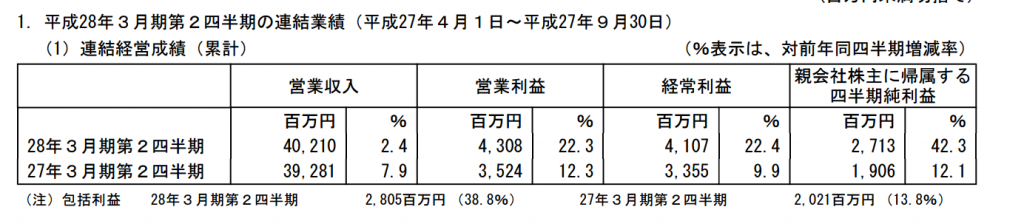
Operating profit was ¥4.3 billion on revenue of ¥40 billion. The operating margin exceeded 10%.
Total assets were ¥59 billion, and profit for six months was ¥4.3 billion, so this was a fairly asset-efficient business.
Still, complacency is dangerous. You must prepare thoroughly for trouble. At the time of publication, this company had also received a business improvement recommendation from the Ministry of Health, Labour and Welfare. An incident like this can cause revenue to suddenly decline.
[Omitted]
After a series of problems, including confirmed abuse by staff at a facility in Toyonaka, Osaka, affiliated with the same group as the facility in Kawasaki, the Ministry of Health, Labour and Welfare summoned the president of Message, the Okayama-based parent company that effectively operates the facilities, on the 13th and handed the president a written business improvement recommendation.
[Partially omitted]
The president of Message said, “Fatal falls and abuse at facilities must never happen, and we take these incidents very seriously. We intend to provide thorough and reliable staff training and review our operational management system.”
Long-term care is stressful for staff. As an operator, you will need to provide them with adequate support.
So, what did you think?
The 2015 article stated the following:
It does not have the glamour of IT, but it is a relatively stable, understated business built up steadily over time.
It may be a good fit for affluent people who own idle land, or for people with a strong desire to make an aging society better.
Unlike the real estate business, however, this business involves continuous interaction with residents, so its selling points, customer-satisfaction considerations, and other factors differ. Keep that in mind.
I hope you will find this useful when considering a startup, a side business, or one avenue of diversification for a successful company.