

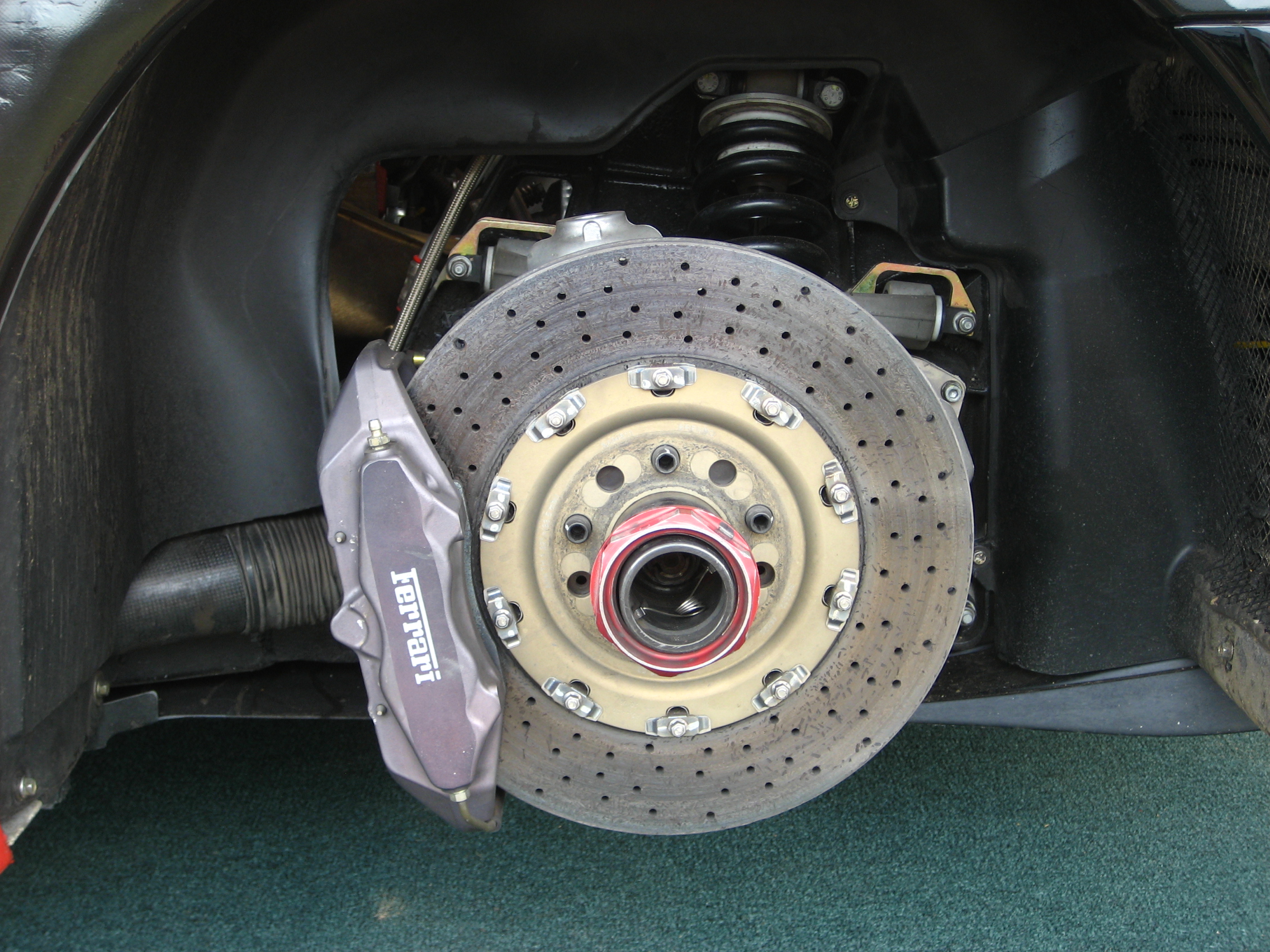
At the time of publication, there were reports that Akebono Brake, a major manufacturer of brake pads, had engaged in ¥1.2 billion of improper accounting.
On the 15th, major automotive-parts maker Akebono Brake Industries (Japanese) announced that it had used improper accounting procedures to overstate sales by approximately ¥1.2 billion over three years. It had reportedly engaged in “channel stuffing,” selling customers more products than they needed, in order to achieve the company’s internal sales targets. (Asahi Shimbun, 2015/12/16 (Japanese))
Employees apparently succumbed to pressure to meet performance targets and became involved in wrongdoing. It is a situation similar to Toshiba’s.
What Is Channel Stuffing?
It means pushing sales onto outside parties to make the numbers fit performance-target deadlines and the like. Because those sales are forced through, the quantity is basically greater than what the other party needs, or the other party may not have placed an order at all.
Because purchasers carry more inventory than they need, they may return it after a certain period or refrain from placing new orders until the inventory has been sold through.
It has sometimes been used to dress up period-end results, but there is nothing good about it: it creates unnecessary transactions and distorts the company’s figures.
Akebono Brake’s channel stuffing
In transactions under sales contracts for automotive brake-related replacement parts manufactured by the Company (hereinafter, the “Products”) with a distributor (Company A), an equity-method affiliate, the Company, from the second quarter of the fiscal year ending March 2013 through the second quarter of the fiscal year ending March 2016, with the purpose of recording sales and operating profit greater than their actual amounts at the end of the second quarter and at each fiscal year-end, conducted “channel stuffing” of quantities of Products that substantially exceeded Company A’s appropriate inventory level, and thereby overstated sales and operating profit at each period-end. The Products were shipped from the Company’s factories, but Products that could not appropriately be accommodated in warehouses including Company A’s sales offices were stored in external warehouses that, in substance, must be regarded as leased by the Company. As consideration for Company A’s cooperation in the “channel stuffing,” special terms differing from ordinary transactions were set, including extensions of maturity dates for notes payable and advance payments of incentives associated with these transactions.
This is a textbook case of channel stuffing.
The impact of the channel stuffing was ¥260 million in sales for the September 2015 period (¥1.2 billion in total from the September 2012 period through the September 2015 period), and ¥77 million in profit for the September 2015 period (¥330 million in total for the same period).
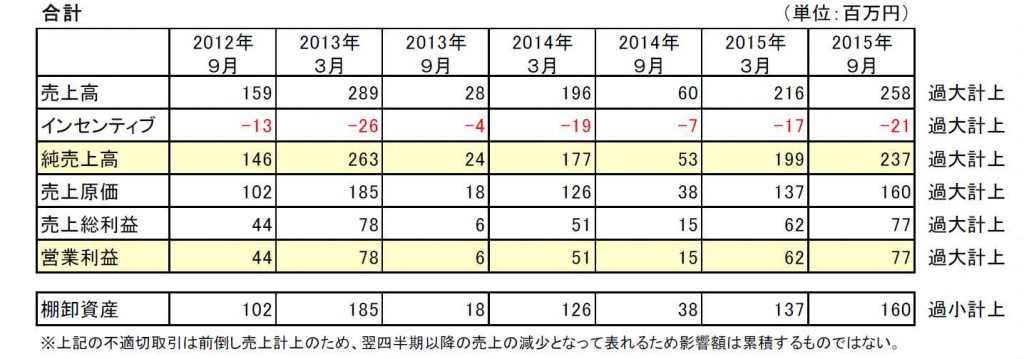
The report’s analysis of why this happened pointed to:
- An organizational climate that tolerated channel stuffing
- The setting of performance targets that were difficult to achieve
- Pressure to achieve performance targets
- Special relationships with business partners (capital relationships and personal relationships)
- Other factors, such as inadequate internal controls, a lack of compliance awareness, insufficient accounting knowledge, and unclear responsibility
Those were its conclusions.
(Reference material: “Notice of Receipt of the Akebono Brake Investigation Committee’s Investigation Report and Measures to Prevent Recurrence of Improper Accounting Procedures”)
Business owners should check whether channel stuffing is taking place at their companies. If it is, put a stop to it—nothing good comes of it.